
Your vagus nerve
The vagus nerve is the rock star of the nervous system and the major connector between mind and body. The word ‘vagus’ means ‘wandering’ in Latin, and it certainly wanders, meandering from the brainstem all the way down to the pelvic floor. It plays a huge part in the stress response, the autonomic nervous system and how we detect danger. Simply becoming aware of it, learning how it works and befriending this giant cranial nerve can have a genuinely positive impact on our lives. As William James put it, “the greatest thing... is to make our nervous system our ally as opposed to our enemy.”
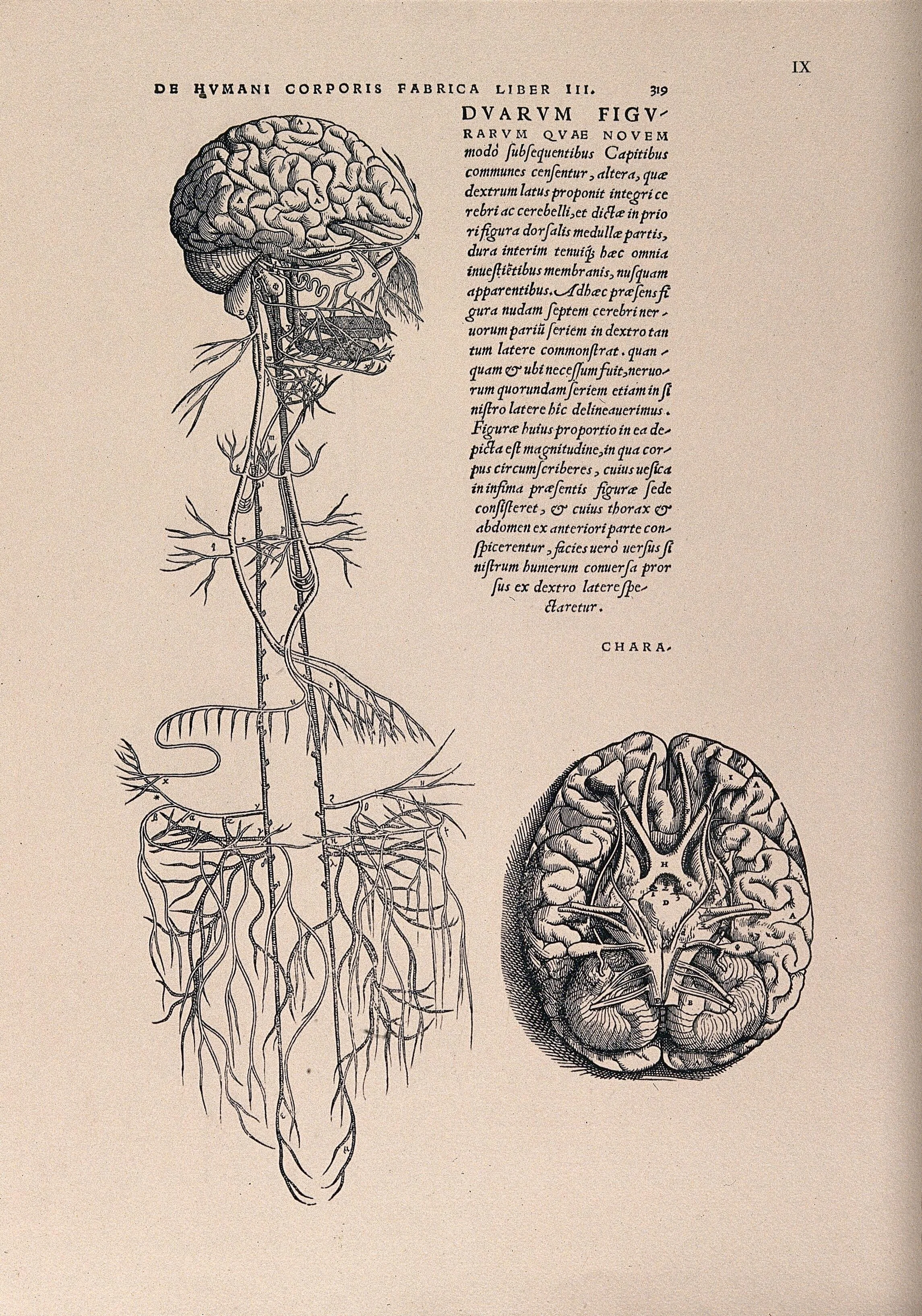
Sometimes called the ‘love nerve’ by Stephen Porges, the vagus is interconnected with our oxytocin networks and made up of thousands of fibres. It reaches the muscles of the neck, helping us nod or hold a gaze, and acts as an information superhighway between the brain and the major organs. It signals hunger to the heart and brain, reaches the spleen and liver to support digestion, and helps regulate hormones, body temperature, blood supply and blood sugar, almost entirely outside our conscious awareness. As part of the parasympathetic system, it also helps us power down and move into rest and restoration.
Two Branches, Two States
The nerve has two branches, dorsal and ventral, with no direct link between them. Each evokes very different physiological states, affects the organs differently and supports different emotions and behaviours. The dorsal branch connects to the stomach and digestive system. The ventral branch, the newer branch in evolutionary terms, connects to the heart and face.
When the ventral vagus and its associated cranial nerves are working well, we enjoy a state of social engagement. We feel safe, with no need to fight or flee, and can be still without fear. According to Stephen Porges, the two branches emerged at different points in vertebrate evolution. His Polyvagal Theory, which uses heart rate variability to track physiological state, describes three responses along a hierarchy: socially engaged, mobilised, and immobilised, corresponding to safe, danger and life threat. It gives therapists a framework for understanding why people behave the way they do, and reminds us that every relationship we have is, in part, training our nervous system to seek connection or seek protection.
Detecting Danger and Feeling Safe
Our vagal system works like radar, scanning for obstacles or danger. Facing extreme threat, the dorsal pathway takes over, conserving energy and pulling us away from connection into numbness or a frozen state. Under threat, the ventral branch shuts down and we regress to older evolutionary responses: fight, flight or a collapsed, dorsal state of withdrawal. When we feel safe, by contrast, our nervous system functions well and we tend to be open, trusting and optimistic.
Dr Karla Mehlenbacher describes vagal nerve research as the “science of feeling safe.” We detect safety by reading others’ posture, tone of voice and eye movement, and a lack of safety can tip us into fight, flight or shutdown. People who have experienced trauma often become highly skilled at detecting threat, and that trauma can be held in the body itself, so that relaxation can trigger anxiety rather than ease. Pain, too, is a cue of threat: when physicians and psychologists applied Polyvagal principles, using breathwork, social interaction and group therapy, clients became pain free.
How Toning the Vagus can improve your life
A Boston University study found that vagal tone may explain why we feel so good after yoga. Practices like breathwork and poses such as bow or cobra stimulate the vagus directly, calming the nervous system and signalling that all is well, which is when healing can happen. Poor vagal tone, on the other hand, is linked to strain across the heart, lungs, liver, kidneys and stomach, along with gut issues such as irritable bowel syndrome that reflect a physiological threat response.
Neuroception, a term from Polyvagal Theory, describes the wordless, gut level way our body reads cues from the world and from within itself. Because many of us have learned to suppress or numb these signals, that disconnect can eventually show up as illness. Dacher Keltner’s research found that images of suffering and stories of inspiration both activate the vagus, and that people with strong vagal tone tend to live more meaningful, compassionate and socially connected lives. Barbara Fredrickson’s work found that loving kindness meditation measurably improved vagal tone regardless of age, bringing breathing and heart rhythm into closer sync. Chanting ‘OM’ has been shown to activate the vagus through vibration around the ears, and posture matters too: an upright, open posture supports ventral vagal tone, while a slumped one can tip us toward stress.
Simple Ways to Support Your Vagus Nerve

Herbal infusions such as skullcap, holy basil, passionflower or chamomile can support a calm nervous system, and there are even devices designed to stimulate the vagus electrically. But some of the simplest tools work just as well: a walk in nature, a cold plunge in the sea, slow breathing, stretching, laughter, a warm smile and good posture. Genuine social connection matters most of all, since interacting with other people brings real vitality to both our vagal and immune systems.
The vagus nerve reaches further into mind and body than almost any other. Getting to know it, and gently tending to it each day, is one of the most powerful things we can do for a fuller, calmer and more connected life.
